


 Stage 1
 Stage 2
 Stage 3
 Bilbao
 Vitoria-Gasteiz
 Saint Sebastian
 Plan your trip

 Bike Friendly

 Cycle lanes-ways

 Greenways

 Enocyclism

 Foodies

 Bikepoints

 Btt

 Clubs

"THEY DIDN'T INTIMIDATE ME. THEY HAD TO PEDAL JUST AS MUCH AS ME!"
author: Ander Izagirre,
The other Tour de France that began in Bilbao
Did you know that the 2023 Tour de France will not really be the first one to start in Bilbao?
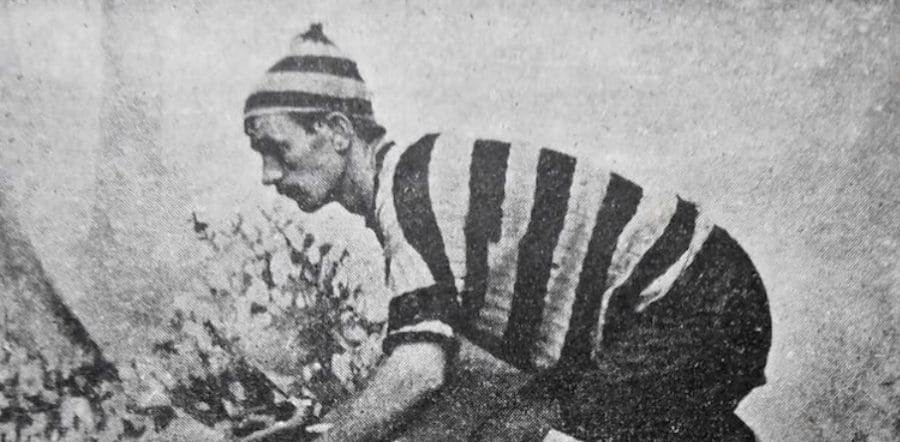
The city also signalled the start of the 1910 event for one of its most unusual cyclists, Vicente Blanco, who decided to actually ride the thousand kilometres between this Basque city and the starting line in Paris.
- I ride my own bike to all the races, whether they are along the coast in Gijon or further afield in Barcelona or Valencia -he used to say-. And it’s much easier to ride to Paris because French roads are in a much better state.
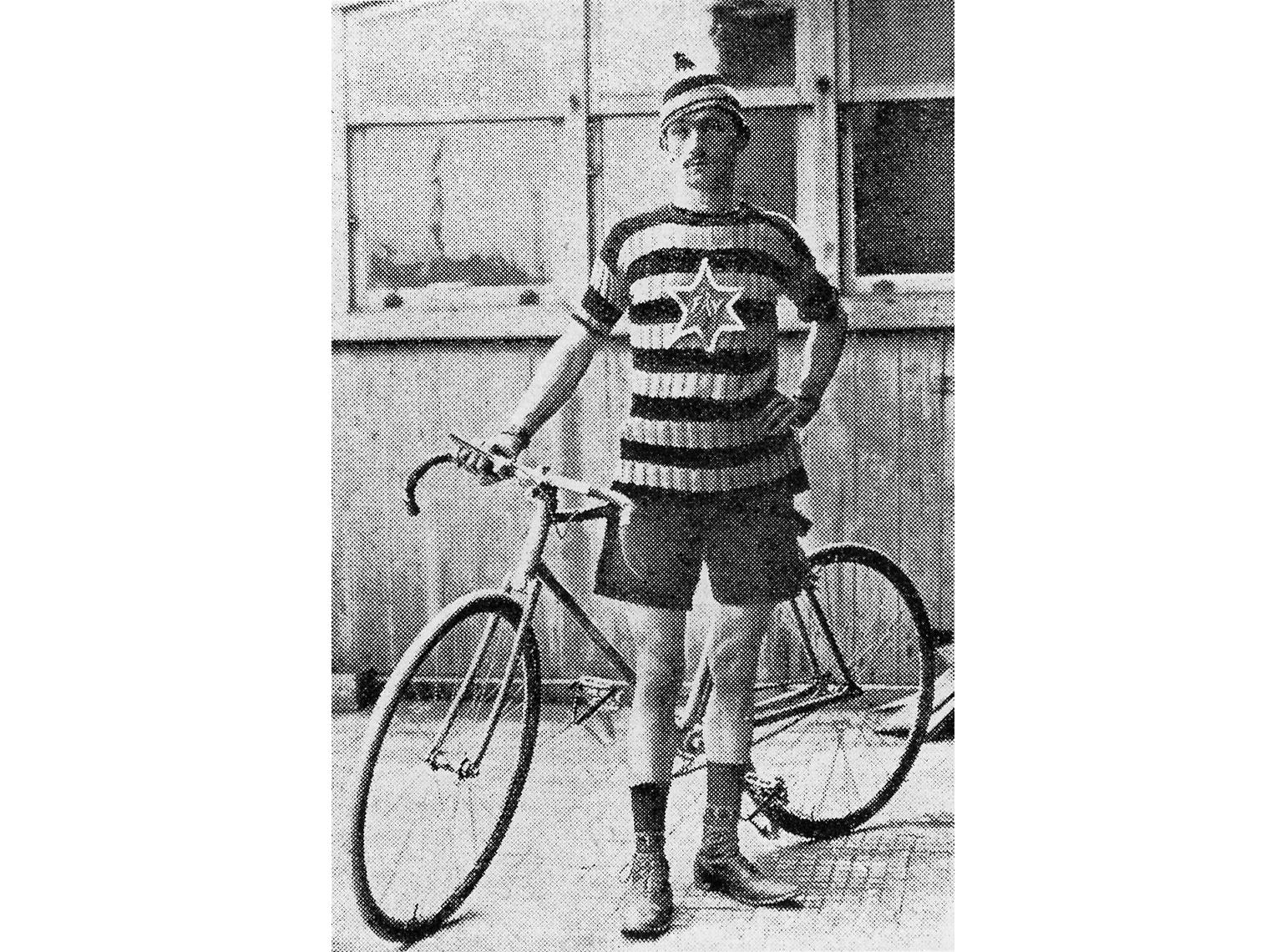
Blanco arrived in Paris a couple of days before the start of the Tour, exhausted, hungry, and lost! By asking around, he managed to find the Alcyon bicycle factory. Once there, he was given the same model of bike that all the riders were required to ride, and they were not allowed to use another one under any circumstances. The spokes on the wheels, the chassis and the pedals were stamped to ensure the riders finished the race with those same parts. Blanco then visited the head offices of the L’Auto sports newspaper, as organiser of the Tour, to collect his shirt bearing the number 155. He had a meagre supper, slept like a log, and then made his way to the starting line at five o’clock in the morning on the 3rd of July. Once there, and still in total darkness, he could just make out the leading riders of his time: Faber, Lapize, Crupelandt...
-Bah, they didn’t intimidate me. They had to pedal just as much as me!
Vicente Blanco, the first rider from the Basque province of Bizkaia to take part in the Tour, was used to overcoming challenges: he was lame.
http://homenajevicenteblancoelcojo.blogspot.com/
*
Blanco was born in Larrabetzu, near Bilbao, in 1884. At the age of 20, when he was working at La Basconia steelworks, a red-hot steel bar pierced his left foot, leaving it a mass of burnt flesh. A few months later, he returned to work at the Euskalduna shipyard, where the cogs on a machine shredded his right foot. Doctors had to amputate all five of his mangled toes.
Blanco walked with a limp, but one day he was lent a bike and soon discovered that he could almost fly. His workman’s wages as a boatman on the river in Bilbao meant that he could not afford any great luxuries, but amongst a pile of scrap he came across a bicycle without tyres. He tied the boat’s ropes around the wheels and rode off. He was so good on the bike that the Bizkaia Athletics Federation [Federación Atleta Vizcaína] provided him with a proper bike, and he began to make a name for himself in the most famous races of the time: Irun-Bilbao-Irun, Irun-Pamplona-Irun, the tour or Volta of Catalonia…he was even crowned Spanish champion in 1908 and 1909.
He became famous above all for his deceptions and conceit. A reporter by the name of Ángel Viribay recalls how Blanco, nicknamed el Cojo [the lame one], showed up at the start of a long race in Bilbao and announced to all his rivals that he would compete on an empty stomach to give them an advantage. None of them knew that a few hours earlier his friends had hidden plates of cod stew at several points along the route. El Cojo was very quick off the mark and used his lead to surreptitiously gulp down the hidden cod fillets, and thanks to that pioneering form of doping he managed to win the race, finishing with a very healthy lead indeed. He rounded off the pantomime by crossing the finishing line with a dog tied onto the handlebars.
He also resorted to a number of ‘tactical’ innovations in cycling: he won the Spanish championship in 1908 because when he and three other escaped riders arrived at a checkpoint where they were required to provide their signature, Blanco signed first and then broke the point off the pencil on purpose before riding off, leaving his fellow leaders desperately hunting for a knife to sharpen the pencil.
*
The Tour has visited the Basque Country almost from the beginning. It first arrived during its fourth edition in 1906, with a stage finish in Bayonne. Even then the event was witnessed by the forerunners of today’s Marea Naranja [the Orange Tide], a crowd of Basque enthusiasts in orange garb that support local Basque riders. Back then, however, the rider was not Basque, but instead a Frenchman from Peyrehorade, a town on the banks of the Adour River very close to Bayonne. Jean-Baptiste Dortignacq, second and third in the 1904 and 1905 editions of the Tour, respectively, was the first foreign rider to win a stage on the Giro di Italia. He was a speedy cyclist in summer, while emasculating pigs on farms in winter. He arrived at the checkpoint in his home town of Peyrehorade ahead of the peloton and accompanied solely by Trousselier. “When Dortignacq appeared, the crowd broke down the barriers and rushed out to hug their idol, cheer him on, and carry him on their shoulders to the registration desk”, according to the report published in L’Auto newspaper.
“Dortignacq made a dash for it, waving his arms to escape from his own fans; he then signed and was bedecked in the winner’s sash, which he removed as best he could and then continued his getaway”. Trousselier had a puncture thirteen kilometres from the finish. He took the bicycle offered to him by a fan, caught up with Dortignacq on the outskirts of Bayonne, and beat him in the final sprint. Nevertheless, he was disqualified: at that time, riders were not allowed to change their mounts away from the official checkpoints. This meant that Dortignacq the pig surgeon was the first winner of a stage of the Tour in the Basque Country.
Since those early days, the Basque Country has been a part of the fabric of Europe’s cycling culture. It was a society that in just a few years had gone through the 19th-century Carlist Wars, a political crisis, economic depression and the migratory flight of young people to the Americas, to rapid industrial growth and greater prosperity. The Basque bourgeoisie was fully aware of the trends sweeping Europe, including those in sport, and the young blades of wealthy families enthusiastically embraced the new fashions of football, tennis, mountaineering, and cycling: they became dedicated sportsmen. The conquest of labour rights, higher wages, holidays and days off increased sport’s popularity. A blue-collar worker such as Vicente Blanco, without the wherewithal to buy a decent bicycle, used his wits and cunning to find a way to devote himself to cycling, even entering the international arena. The Basque Country witnessed a sharp increase in the number of sports clubs, bicycle manufacturers, race organisers, and companies and associations that provided a rudimentary form of sponsorship for the first riders. What’s more, France was just over the border: it was the birthplace of competitive cycling, the country that had just invented the long races divided up into stages, and was bringing them to the Basque Country.
So it was that in 1909 a group of members of the cycling club Club Ciclista San Sebastián attended the Bayonne stage and awarded a prize of 25 pesetas to the first rider in the category of isolé (isolated: without a team) to cross the finishing line. The management of the L’Auto newspaper invited these Basques from Saint Sebastian to dinner and urged them to encourage a Basque cyclist to register for the following year’s Tour. The first participant had been Raymond Etcheverry, a rider hailing precisely from Bayonne, who took part in the 1907 Tour, but did not even manage to complete the first stage. Nevertheless, the organisers still wanted a local Basque rider from the other side of the frontier.
Upon their return to Saint Sebastian, the club members relayed the Tour’s invitation within local cycling circles, and Vicente Blanco, el Cojo, leapt at the opportunity: he would ride to Paris to take part in the 1910 edition.
*
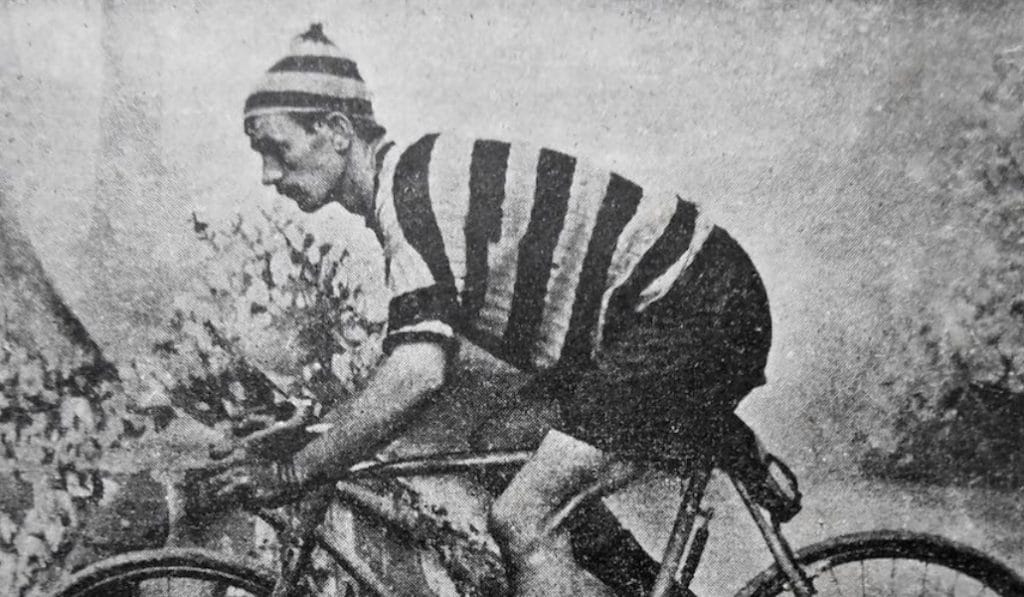
That Tour, which Vicente Blanco actually began in Bilbao, was a daunting prospect. For the first time ever, the organisers’ route included pedalling from one end of the Pyrenees to the other, from the shores of the Mediterranean across to the Atlantic, in just two stages: Perpignan-Luchon (surmounting the mountain passes of Port, Portet, Portet d’Aspet and Ares) and Luchon-Bayonne (tackling Peyresourde, Aspin, Tourmalet, Soulor and Aubisque), which was to become a legendary feature of the Tour, and held over and over again for decades. Today, it is a challenge for cycling enthusiasts that cover its 326 kilometres as a homage to its pioneers. As a precautionary measure, the organisers also introduced the “broom wagon”, a van that followed behind the peloton and “swept up” any stragglers that were exhausted or injured, sapped of all their strength, and at the end of their tethers. A quarter of the riders that had enrolled for the race withdrew as soon as they found out about the proposed route.
https://aboutbasquecountry.eus/
El Cojo was not cowed by the route or by his rivals. They had to negotiate the same slopes and pedal just as much as he did, he said, although they seemed to cycle just a little bit faster: the race began with the favourites speeding off out of Blanco’s sight quickly and for good. Blanco does not appear on the final classification for that first stage between Paris and Roubaix. He claimed to have crossed the finishing line, although outside the time cut. He attributed his failure partly to mechanical issues and falls, but above all to a key circumstance: “I was helpless to compete with those well-fed beasts”.
Hunger was an obsession for those first riders. The leading cyclists in the peloton in those early Tours had their team’s support, but many of the participants took part as lone riders in the category of isolés: “The rider competes in the race as an adventurer”, according to the regulations. Victorino Otero, from Cantabria in Northern Spain, took part in 1924, as one of these isolés: “Not even for all the money in the world would I take part in another Tour. We didn’t have anyone to provide us with food and we had to stop off at shops to buy something to eat. Sometimes, just before the checkpoints, the ‘stars’ threw away whole chickens, because they were about to be given freshly cooked ones, so we jumped off our bikes to look for them in the ditches beside the road”.
When a broken and famished Vicente Blanco returned from the Tour, the directors of the Federación Atlética Vizcaína and the sports club Club Deportivo in Bilbao came up with the best way of honouring their hero: a banquet. A reporter called Julián del Valle describes the meal held in Balmaseda: the first course was paella cooked in the local way ‘a la vizcaína’ - Blanco served himself twice, “two helpings with all the usual trimmings” -, followed by hake in a garlic and parsley sauce, ‘salsa verde’ -“he made short work of four fillets and then mopped up the sauce”. The next courses were spiced freshwater carp and a half-kilo T-bone steak with peppers. The cyclist gnawed the bone clean and asked for seconds. His fellow diners laughed: “Careful, Vicente, you don’t want to overdo it!”. But el Cojo simply put his head down and devoured the second steak: “But I’m just getting started!”. When they brought out fruit at the end of the meal, he turned it down: “Fruit is for monkeys”. Satiated, he started to roll a cigarette before the coffee was served. Just then, the waiters appeared with brimming earthenware bowls, leaving el Cojo open-mouthed. He patted his swollen stomach, unable to take another mouthful, and stammered: “Hey, this isn’t fair…You ‘should of’ warned me there was rice pudding!”.
Author: Ander Izagirre  , journalist and writer.